Wednesday, May 1, 2019

Elijah Walker


Elijah Walker
Graciela Iturbide "No Title"
1972, Silver Gelatin Print

I selected this image because I have lost people close to me due to drinking and/or smoking. Many of them being immediate family. When I first saw the photograph I instantly thought of my lost loved ones. Drinking and smoking are two very unhealthy habits that can lead to death. With the shot glass on the table and a cigarette in one hand, I see her to represent death. I also believe she could be facing death herself instead of being it. The distress on her face when confronted with death as a soon to be victim. The skull in the background represents nothing but death with "RIP" written above a grave inside the skeleton's nose. The eyes also seeing nothing but death as it displays what looks like to be people on their deathbed.

Undergoing further research I learned that Graciela Iturbide's mentor was named Manuel Alvarez Bravo, who was known for his "poetic" images of Mexican people and places. He was also apart of the artistic renaissance that happened after the Mexican Revolution. What I learned was despite not titling this photograph, it was apart of her series called "Hay Tiempo" which translates to "there is time." This was a practice that her mentor taught her who "urged her to slow down, observe, and patiently wait for the right moment to release the shutter." I found this to be fascinating as she continued to carry on her mentors legacy throughout her own work as well.

Monday, April 29, 2019

Julio Diaz


Julio Diaz 
Todd Hido, #3737 
2005, Archival pigment print 

 Todd Hido is best known for his photographs of haunting suburbia in "Homes at night". Hido uses only available light and long exposures that make these saturated images come to life. He gets inspiration by driving around at night taking pictures on anything that captures his eyes. The reason why I decided to pick this image because it has horror elements. If we take a look around at the photograph we see horror elements such as the long lonely road, cloudy with rain, and the sense of loneliness. It didn't just catch my attention because of the horror aspect but the more I started to stare at it, I felt as if my journey will be long and tiring. As of right now I am stressed and can't get enough sleep. Looking at this picture makes me feel like the road ahead of me is going to be long, but yet worth it. As if the light at the end is what I am trying to reach. 

Alex Aquino


Alex Aquino
Clara E. Sipprell, " Moment of Life"
1966, The John Day Company

Clara E. Sipprell was born in Canada in the early 20 century. She was well know for her pictorial landscapes and for the portraits of many actors , writers, artist, and scientists. When I was looking for the perfect photo I was in the state of sensibility. People think that have my life together or I'm always happy. Sadly, it's the opposite of what I always feeling inside. I have this pain in my chest that not able to breath because I'm not able to be my truth self in front of two people that I love the most my parents. Every time I come from school I lay on my bed and start crying and screaming my pain away. It's the only cured for my soul and able to survive another day in hell . This is one of the reason this photograph hit likes home/soul and all my roots in my entire body. The reason may ask why I'm not looking for my happiness in the moment is because I'm not ready for my other consequence can bring my freedom. I'm trying my best to work for it and i will never going to give up on.

Daniel Siguenza

Daniel Siguenza
Richard Kalvar, "Woman looking at herself in store window."
1969, Silver Gelatin Print

Looking through Richard Kalvar's book, this is the first photo I encountered. Kalvar focused a lot on street photography and combined timing and framing into his work. This photo of a woman looking at her reflection caught my attention for that reason. The way the photo is framed is interesting, almost centered perfectly. There is a fire hydrant only visible in the reflection. The photo makes me think of analyzing oneself, taking a look in the mirror. It also sparks curiosity in me. Is she analyzing herself? Was she studying her face?

Nestor Raigoza


Nestor Raigoza
Martha Cooper, "Banksy The, The Bronx"

I choice this photo because graffiti has big impact on me. You can express what's going on the world by graffiti art. Banksy is a big street artist and he came from Europe. He does painting on the walls of what's troubling the world. Martha Cooper took this picture in New York, The Bronx. This work of art in this picture has a lot meaning to it. Ghetto for life it showing how there's a lot of people that are growing up in poor areas. This painting has a unique drawing to it has butler serving spray cans. Butler are not usually working for the poor class. The couch on the picture wasn't always there. Martha Cooper added the couch then had someone seat on it and take a picture with him on it. Some people were getting offended with the painting because people weren't moving into the Bronx to be ghetto.

Wednesday, April 24, 2019

Arianna Gilmer


Arianna Gilmer
Sharon Core, "1885"
2011, Chromogenic print

I choose this image ,because it challenges the idea of photography that subconsciously been ingrained in my head from childhood. Popular photography is often classified as "pretty image" that is to be what the masses want to see. However, Core challenges her audience to view the stereotypical flowers in a pot image in a different lens. The picture captures the moment of the flowers beginning to wilt and and go limp in the black pot, this being the point in which people are to discard the flowers. Growing up my mom loved the idea of hanging flowers to dry around the house and eventually them into wax. For me the image evokes a nostalgic memory of the flowers drying around the house in my childhood .There is beauty to be seen at every stage of life a flower goes through and Core does a great job of capturing the beauty in the chiaroscuro of the image.

Elijah Collins


Elijah Collins
David Jackson, "Emmett Till"
1955, Medium: Gelatin Silver Print

A huge part of the reason, I chose this photograph over many was that the relevance to today.
When I see this photo, I see pain, I see a mother and father who just lost their 14-year-old son
off of assumption. In1955, Emmett Till, a black young man from Chicago, was visiting relatives
in Mississippi when he went by a Grocery store. The store owner Carolyn Bryant, a white
woman accused Till of flirting with her and whistling at her. A couple of days after the alleged
issue, The white woman's husband Roy and his half brother, J.W. Milam, took the boy from
his great-uncle's house. The two then beat Till until he was unrecognizable to his own parents,
shot him, and dumped the lifeless body in the Tallahatchie River. Although that is bad, it only
got worst when a white jury quickly acquitted the men of the massacre. When Till's mother
Mamie came to identify her son, she told the funeral director, "Let the people see what I've seen."
That is the reason for the open casket funeral. This touches deeply with me because although
this was taken in 1955, this is essentially the same violence that is happening to my people,
where they are being accused of something or just even going about their day as normal
and are beaten and killed by law enforcement and anyone. Just like Emmett Till who died
for nothing and received no justice is the same way that Black people are dying in 2019 and
the people who are killing them are white and they are continuously being acquitted
of these wrongful deaths.


Grace Scott

image1.jpeg

Grace Scott
Anne Brigman, "The Breeze"
1910, Warm-toned gelatin silver print

I selected this image because it speaks to me about female empowerment. When I look at this photo I see a woman standing tall, proud and nude in nature, which makes it absolutely beautiful. That is who Anne Brigman was though, she loved the nude female figure, she used women to represent mythical spirits and sprites. Anne would usually photograph herself or other female photographers because models would refuse, they didn't want all of their flaws on display. The scarf/ shawl flowing around her shoulders represents, to me, the complete freedom this woman feels in being so exposed in nature. The fact that you can't see her makes her seem as if she is a spirit in another world. This photo has taught me a lot about the effects light and a filter can have on an image, they can make an image appear to be something completely different than what they truly are.

Jonathan Cortez


Jonathan Cortez
Dave Jordano, "Ben, Southwest Side"
2010

I selected this image because it reminds me of my childhood when I was growing up. Growing up in East LA in a common Hispanic community, all I saw were lowriders every Sunday strolling down Whittier blvd. What caught my attention most about this picture was that it reminded me of my uncle who passed away a couple years ago. It reminded me of him because he had the same exact car in the same exact color which really tripped me out. This picture simply just takes me back to my childhood days.

Faiz Hussain


Faiz Hussain
Joe Rosenthal " Marines Raising the Flag On Mt. Mirabachi at Iwo Jima"
1945

This photograph has a good history behind it. This photograph shows five U.S. Marines and a Navy sailor raising the American flag over the battle-scarred Japanese island of Iwo Jima. It was during the World War II, it was one of the flag that was raised during the war. Earlier that day they raised a small American flag, but because of the size troops were not able to see the small flag. Then, they have to raise this flag that was a lot bigger in size and it took six soldiers to raise it.

This photograph made me feel safe and protected. Because this photograph shows how U.S. Army is standing for us and protecting us day and night. They are sacrificing their life for our safety. And this picture also shows unity, how we all together to raise the flag. I think we all should appreciate and be thankful to them for what they all are doing for our safety.

Kimberly Mendez


Kimberly Mendez
Duane Michals, "Heisenberg's  Magic Mirror of Uncertainty"
1998, Gelatin Silver Print

When I was selecting am image to post, I came about this one and it showed me the different sides and faces a person can have. There is always the one face that you see when you are first introduced to each other, then as time goes by you start to see the good, bad , ugly, and the pure. Is she deciding what face she wants the world to see that day? Or is she still trying to figure out who she is as a person? Its just up to you as the friend/spouse/ or even your own self to decide what kind of face you see yourself wearing that day and if its the one you want to be known for wearing. 

Leslie Sanchez


Leslie Sanchez
Authur Fellig "Their First Murder"
October 9, 1941, printed 1950, Gelatin silver print

This photograph was very eye captivating for me, especially because of the various emotions displayed. At first, I was confused trying to depict in what was going on. Also, their reactions do not match with what I would have expected someone to react after just seeing someone die. Especially the little boy that looks like he is smiling. At the same time their reactions are very raw and human. Everyone has different reactions, yet they are all valid and real. The way everyone is positioned it is very chaotic. The girl off to the right looks like she is being punched in the head. This makes me feel uneasy wondering if they are okay or is the little girl okay. It is also timeless in that where people are absorbing the fact that someone just died and someone is taking a picture of them. It makes me think of the exact moment where I'm taking in a news I heard, and my reaction. Authur Fellig, or Weegee, would photograph crime scenes before any emergency services would arrive. He also had other work like taking pictures of people kissing in the theater, thinking they were not seen.

Emily Vail


Emily Vail
Arthur Leipzig, "Chalk Games"
1950, Silver Gelatin Print

This photo, I feel is a unique one – especially for its time. The 1950's was the golden age for television, and in a city like New York City, it is astonishing how these kids are still finding the fun in being outside with each other. The flamboyant drawings that are drawn into the street made me originally think that this photo took place in a creativity hub like the 1980s. This photo keeps my attention mostly because of the fact that I am trying to decipher what the drawings are. It can truly help the world understand what was interesting to the American child during the 1950s. The composition of Leipzig's photo is interesting because of how he kept it in black and white to give it the historical effect, even though it is an artistic based photo. From the old cars, the matching outfits of the kids, the bird's eye view of the street, and to the unusual sense of peace in this photo: everything seems to work together. That is why this photo is so captivating.

Riya Israni

Riya Israni
Jerry Uelsmann, "Apocalypse II"
1967, Gelatin Silver Print

Jerry N. Uelsmann produces composite photographs through the use of multiple negatives and hours of darkroom work. Unlike most photographers, he does not use multiple attachments. Instead, he uses a single camera, and several enlargers. Uelsmann approaches his work with the belief that mistakes are simply a part of the creative process. Uelsmann's work also utilizes recurring imagery, as the negatives he uses may appear as a focal point in one piece and as part of the background in another. I chose this particular image because I believe it holds a sense of mystery and surprise, while simultaneously providing a clear example of the intricacies that Uelsmann is able to achieve with his complex process. In addition, the tree-like form provides a sense of danger, while also providing beauty. I also like that there is no clear interpretation or meaning to the image—it is completely up to the viewer.

North Vincent


North Vincent
Friedrich Seidenstücker, "Berlin, Winter"
1947

I have always had a great interest in history as well as scenic beauty, and this image seems to combine these aspects very well. The artist, Friedrich Seidenstücker, was a German photographer and sculptor known for his images of post-war Berlin. This is a photo of a bombed-out building in Berlin two years after the second Word War ended. It was taken in black-and-white, although even if color was added, there would likely be no difference. Snow covers every surface, allowing the building parts to jut out and break the uniform white. The structure, almost looking like a castle from medieval times, sits in the very center. Above, the sky shifts from grey to white, showing the texture of clouds. The image is very still, with absolutely nothing in motion; this is helped by the fact that there is nothing alive in the photo. This might have been done on purpose to show how much of the city was literally left lifeless after the war.

Veronica Bautista


Veronica Bautista
"Wennjie Qiao-Solar Eclipse"
August 21, 2017

Photography allows your mind to be creative and a wanderer. What I took out from this esthetically pleasing photograph from Wennjie Qiao is the passage of time; time is something our eyes cannot depict as well as this picture can. This photograph of the solar eclipse made me understand how often we may forget that our time is running out and we need to enjoy everything in life, family, nature and to remember that even the sun needs a break. That brings me to conclude and ask what are you willing to do with your time as of now? Will you be more loving? Will you try to do something you've always wanted to do? Will you be able to see the next solar eclipse? Photography can take us to whole different worlds and thoughts, but are we willing to see what is depicted?


Alexa Daffern


Alexa Daffern
Leonard Freed, "Muscle Boy"
1963, Vintage Gelatin Silver Print

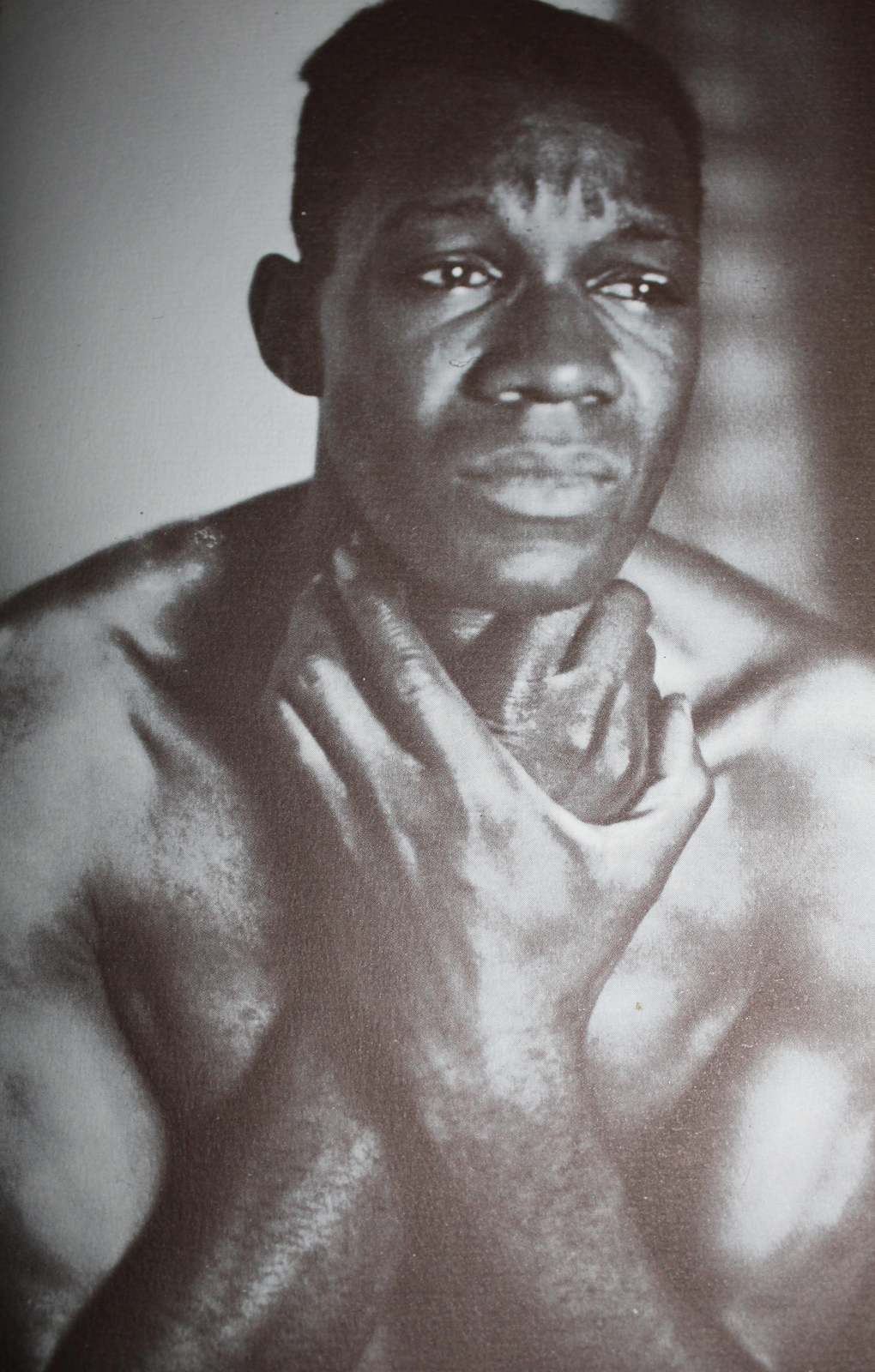
I selected this picture because it moved me and reminded me of a topic that is very near and dear to my heart and that I have become very passionate about. In this photo, you see a handsome little boy lifting his arm and flexing his muscle, but you can very clearly see his ribs underneath while doing so. This reminds me that many kids growing up aren't blessed with the same privileges that we are. Many starve, many don't have clothes, and so many don't have a place to call home. It makes me take a step back, reflect on my life and all that I have, and remind me that I should be grateful for the life I've been blessed with. So many people on the other side of the world or even in more run down cities struggle more than me and people who have more should make more of an effort to help those who are less fortunate.

Ernesto Alcaraz


Ernesto Alcaraz
Hiroshi Sugimoto "Radio City Music Hall"
1978, Gelatin silver print

"Suppose you shoot a whole movie in a single frame? " In 1976, Sugimoto experimented on what it would look like to do just that and the results were spectacular. The process of how these images are made adds to their beauty. The long exposure causes the screen to look completely white and in most of the other theater photos the people watching the movie will not appear in the photo. The light blooming through the rows keeps your eyes moving through the image. Although there are many other photos by Sugimoto of theaters, this one intrigues me and stands out from all the rest because of the architecture of the hall and how the people are still visible watching the movie as if they were watching a blank white screen the entire time. This provides an underlying mystery to whomever is viewing the photo and allows them to create their own narrative.

Hayley Allen


Hayley Allen
Keegan Allen "That's life. I enjoy the rainy days."
2015, Digital

I chose this photo here made my Keegan Allen in his book "life. love. beauty" because the image captured my eye. I was flipping through his photo book in his New York section when I found this. The reflections from the lights bouncing off the ground, the blurry cars, and the main focus of the broken abandoned umbrella really caught my attention. I visually really enjoy how the subject of this photo is placed at the center bottom of the image, not directly in the middle. I like the harsher focus on the umbrella making the New York City background blurry. This picture makes me question its previous owner. I wonder at what point walking in the rain someone gave up and chose to get wet instead of trying to salvage their umbrella… makes me wonder.

Nomar Alonso

Nomar Alonso
Diane Arbus "Masked Woman in a Wheelchair"
1970

I chose this image because it was the first one that caught and held my attention. I had been scrolling through a book of Diane Arbus' photos and this was the only photo that made me question what was going on. It is such a simple photo, yet there is so much missing. Was the woman simply moving along with the mask? Was the mask given to her for the photo? Was she posing for the photo or hiding her face from the camera? where was she going?

 I read a little About Diane Arbus and found in a short documentary that she felt different emotions when she looked into the glass of a camera. No matter what happened on the other side of that glass, she was simply amazed. I think thats what I want this photo to mean to me. I want to run into a situation like she did in this photo and I want to experience what she experienced.