Wednesday, April 24, 2019

Nomar Alonso

Nomar Alonso
Diane Arbus "Masked Woman in a Wheelchair"
1970

I chose this image because it was the first one that caught and held my attention. I had been scrolling through a book of Diane Arbus' photos and this was the only photo that made me question what was going on. It is such a simple photo, yet there is so much missing. Was the woman simply moving along with the mask? Was the mask given to her for the photo? Was she posing for the photo or hiding her face from the camera? where was she going?

 I read a little About Diane Arbus and found in a short documentary that she felt different emotions when she looked into the glass of a camera. No matter what happened on the other side of that glass, she was simply amazed. I think thats what I want this photo to mean to me. I want to run into a situation like she did in this photo and I want to experience what she experienced.

Karina Blanco-Johnson


Karina Blanco-Johnson
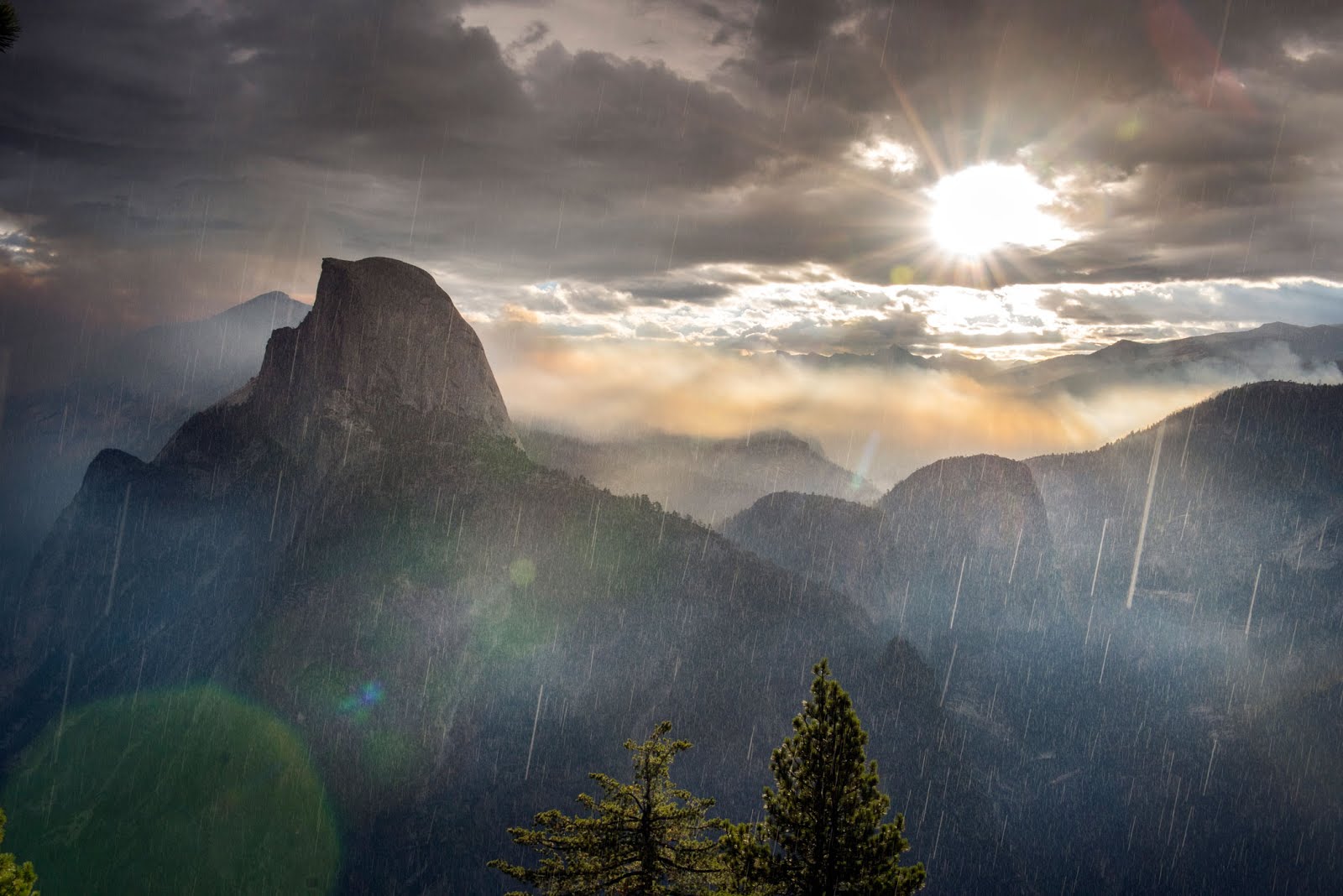
Stuart Palley " Meadow Fire"
2014, Unknown

This photo is about the 2014 wildfires at Yosemite National Park. What you see is it raining at the end of the wildfire in the meadow around Half Dome ( the rock formation on the left side of the frame.) in the morning. At first I selected this picture because it seemed to show a message telling us that nature works in mysterious ways but it will correct itself or the sun will always come again. Not only that but all the contradictory in the photo is what started to pull me in. The fire being put out by rain while the sun is rising. It seems like a made up story. Technique wise, I liked how the details of the sun rays and rain streaks were able to pull through and how the green trees at the bottom center added a little more color to seem less dull. After researching the story behind the picture it made me truly believe the messages that I first thought when seeing the picture. This fire started because of a lighting strike that hit a tree and spread quickly because of high winds. A helicopter flew tourists off of the top of Half Dome while backpackers on hiking trails in some areas were told to leave the area. After 700 acres burned the fire finally died out.

Tristan Stumpf


Tristan Stumpf
Sam Shere, The Hindenburg Disaster
1937- Gelatin Silver Print

This photo is one of great infamy taken by Sam Shere on May 6, 1937. It depicts the fall of the Hindenburg zeppelin moments after the hydrogen, meant to keep it afloat, caught flame. Out of the 97 people on board, 36 were killed. That is a surprisingly high survival rate for the crashing of a metal balloon filled with flammable gas and civilians. However, this photo, almost single handedly, brought an end to the use of airships on a global scale. It was not due to this being the first tragedy of its kind; in 1933 the USS Akron went down over New Jersey killing 73 people. October 5, 1930, had the crash of the British R101 over a field in France killing 48 people. These are only a few of copious amounts of crashes that occurred prior to the Hindenburg; so what makes the crash captured by Sam Shere more powerful than one 4 years prior with over double the casualties? Perhaps it is just the fact that it was captured at all.

Logan Bik


Logan Bik
Danny Lyon ""Building Shakedown, Ellis Unit, Texas"
1968, Gelatin silver print

I chose this image because it provides an insight into the prison system of the 1960's. In the image we can see the flow of prisoners through the halls—naked. The guards peering down, grimaces on their faces. The photographer, Danny Lyon, used a slow shutter speed causing a blur effect, allowing for the viewer to fill in the gaps and see amount of prisoners compared to guards.

This idea of power is one that is prevalent in the justice system. Although we are all human, when someone is given the idea that they hold more power, they begin to act as gods, ones that unearthly compared to the prisoners.

In the past, Danny had photographed a prison rodeo where he had met some inmates who encouraged him to make photographs at the prison. Lyon later moved to texas and spent 14 months going to 7 of the 13 Texas prisons documenting life behind bars, often creating friendships that lasted till death.

Romina Romani (updated)


Romina Romani
Annie Liebovitz, "Meryl Streep, New York City"
1981, Archival Pigment Print

Movies are a huge part of my life. The happiness, the sorrow, the laughter, the joy it brings me when watching a film. Movies have the power to take you away from reality all while also teaching you about reality. When watching the Annie Leibovitz documentary, I was so inspired by her body of work, I bought one of her books that showcased her artwork and the image that stood out to me was the photograph of Meryl Streep, the goddess of the Oscars and film in general. What first caught my attention was the white on her face and the action of pulling her skin. It is a very peculiar photo. Questions popped in my head and my first thought was she is hiding either something or herself and the white paint is a type of mask. The meaning behind this photograph is the life of a woman working in the industry. Women are expected to undergo mutations and change themselves to be what society expects them to be and wants them to look like. The balance of color plays out well with the lighting. The close-up shot captures Streep's emotions through her eyes, a smirk forming in her face as if she knows she is going against the norm and wants viewers to know it. This image struck me because being a woman working in the industry, specifically dance, some teachers have told me I have to be a certain way if I want to be a dancer and what happens behind the scenes is a great representation of a dog eats dog world.

Kobe Siy


Kobe Siy
K.C. Allen - "LA Times Baseball 2019 Season Preview"
Published Sunday March 24, 2019

For my "One Minute One Image Project," I chose to present about the image on the front cover of the "LA Times Baseball 2019 Season Preview." This was published on March 24, 2019, which was the Sunday before the start of the 2019 MLB season, which began on Thursday of that week. The image shows two star players from both Los Angeles baseball teams. Mike Trout of the LA Angels and Justin Turner from the LA Dodgers. This image really inspires me because #1) I love baseball; and #2) I am a huge fan of both of these players. The reason why these two were selected to be on the front cover is because of the impact they make on their team. Turner, who is 34 years old, is one of the leaders for the Dodgers. At his age, most people tend to say that he's in the decline stage in his career, however he is not showing signs of slowing down, as last year, he posted a .312 batting average and is trying to lead the Dodgers to their first World Series title since 1988. The photograph was taken by K.C. Alfred, who is a photographer at the San Diego Union-Tribune. 


Marilyn Escobar


Marilyn Escobar
Christina Fernandez, "1945, Aliso Village, Boyle Heights, California"
1996, Gelatin Silver Print 


The photograph spoke to me because it is a woman going off to work in what seems to be a maid uniform.This photograph just reminded me of all the hard working women in my life because they immigrated here. Christina Fernandez, series Maria's Great Expedition, is photographs of herself as her great-grandmother Maria Gonzalez who immigrated here, was personal to her but she made it about everyone and the immigrants experience specifically the women. All the women in my family when they arrived they started off as housekeepers. I chose this images because, it represents all the hard working immigrant women. Christina Fernandez is representing the immigrant women and their sacrifice for their kids and family who had to be left behind, just as my family has to be able to provide for them.


Marvin Guerra


Marvin Guerra
James Nachtwey, "Famine in Somalia"
1992

I chose the image Famine in Somalia because it spoke to me on different levels and really made me feel something that I never felt from an image. The image made me really sad because I feel like people take food for granted in the states and in other places people never really know where their next meal is coming from. The photograph really shows how bad the food crisis in Somalia was at the time because the woman is being carried to a feeding center because she could not walk. From the photo you can see the man or woman sitting on the ground with their back faced to us and it is scary to see how much their bones are visible. These people probably would do anything to just eat but at the time prices on food skyrocketed and was not affordable. It really makes you think about all the things we take for granted and how good we have it here in the states.

Kevin Moreno


Kevin Moreno
Candy Hansen(JPL) and Carolyn Porco(University of Arizona), "Pale Blue Dot".
February 14, 1990, Digital

I selected this image because it helps me put life into perspective. In this image Earth is only one small pixel. Earth looks so insignificant and so do our problems. This image highlights that everything we use to divide ourselves, such as race, religion, political affiliation, and sexual preference, is just meaningless. We are all humans living in a speck of dust in this vast universe. As bleak and dark as this sounds, it is meant to free us. Learning how insignificant and unimportant we are can help us realize how beautiful and delicate the world we live in is. This image is about understanding our place in the universe and to not take what we have for granted. This image and its message is more relevant today. We are seeing our lawmakers put greed and self interest ahead of our planet, not realizing that this is all we have.

Thursday, January 3, 2019

Andes Guerra

Andres Guerra
Man Ray, "kiki de montparnasse"
1924, ?

I selected this image because it spoke to me about the way someone is first viewed by another person, the features that are seen first by others can sometimes leave a warped view of who we are to other people. When i look at this image of Kiki, who embraced her body and her sexuality with pride, it makes me think about the way other people must have looked down on her in a time where most would not express themselves as much as Kiki. The exceptions however were typically artists, and this image is a warped view of Kikis face, almost like a puzzle, where her lips, eyes, forehead are disjointed and must be put back together by the viewer, despite their original first impressions of a person. We must look further past our initial first impressions of a person, which are easily tainted and warped views, if we actually want to truly try and understand another person.