Sunday, September 7, 2014

Rebecca Anzueto


Rebecca Anzueto
Mike Wells, "Uganda Famine"
1980

This photograph was taken by Briton Mike wells in the Karamoja district in Uganda on April of 1980. It shows a missionary holding a hand of a Ugandan boy. It takes place during the 1980s famine in Uganda that was caused by droughts and hardships. During this devastating event 30,000 people lost their lives because of starvation and 60% were infants. Mike wells took this photo to show the extreme state of starvation in Africa. This photograph won a prize in a competition, but mike wells felt ashamed that he took the photograph of a starving child. He did not intend to win the completion or enter it, he was in fact against it. This photograph reminds me of the disparity, struggles, and injustice in the world.  How some people have to fight their problems while others fight to survive on very little resources. I picked this image because it's a reminder to everyone to value their lives because some children are unfortunate and it also serves as motivation to help and make a difference, because no one deserves to be in this situation. Despite the saddening image of a starving child this photograph does have a powerful aspect that shows hope and love between two different people during a heartbreaking event.

Tzuan Lai

Tzuan Lai
Joe Rosenthal
1945

The first time I ever seen this photo is in the movie "Flags of our fathers." It's a movie about the Battle on Iwo Jima between U.S and Japan. The original name of this photo is "Raising the flag on Iwa Jima." It was taken by American photographer Joe Rosenthal, who won the Pulitzer Prize because of the photo. The background of the photo is WWII, when U.S Marines landed on Iwa Jima and tried to take it down because it's a very important spot and last standing of the Japanese troops. It's one of the most tragic battles during WWII, because both sides don't back down and retreat. U.S Marines finally took down the island but both sides sacrifice tons of soldiers. This photo gives me a feeling when sometimes life struggle with depression or facing disasters. If you don't give up, everything will come through and there will be a new start. 

Sergi Beltran

Sergi Beltran
Henri Cartier-Bresson, "Hyeres, France"
1932, gelatin silver print

I truly love Henri Cartier-Bresson's idea of a "decisive moment". This picture is one that truly captures the essence of capturing a single moment in time. He waited until that bicyclist came by and took the picture. Although the moment he captured may seem insignificant it really does make the picture. His choice of perspective gives an interesting view of everything. The lines and shapes of that the stairs and guard rail as well as the street and walls gives this picture a complexity in that it has lines and forms in many directions. To me, this reminds me of calligraphic lines and an expressiveness with the dark rails and lines. What makes the picture truly connect is the bicyclist where he pops out in black clothing from what would be a blank surface if he wasn't there. As a result, this enables the viewer to move his or her eye across throughout the image. I love how it kind of reminds me of the starting of a day. It really is amazing how this picture can show the beauty of capturing a moment in time that we would fail to see without the camera.   
 

Edward Gomez

Edward Gomez

Lee Jeffries, Untitled (Project: "The Homeless")

2012


Lee Jeffries from Manchester, England has been on a mission for the past six years going around capturing photos of homeless people who catch his eye and sits down with them to hear their story. Jeffries states that he steps into their world in order to help others realize that they're like everyone else but who have made some wrong decisions in life. He takes portraits of the homeless using high contrast in his images allowing people to see their pain and make the image more powerful. His style enables people to see clearly their dirtiness, wrinkles, scars and deep eyes of struggle from these homeless people. I chose this image because you can see the sense of relief as she smokes her cigarette after a daily struggle living in the streets. This image is powerful from the long dirty nails to the face expression as she inhales the smoke, you can see her struggle. 

Rafael Mota

Rafael Mota
Emmet Godwin, "Emulation Project"
2010

Emmet Gowin was born 1941 in Danville, Virginia. He has a BFA in Graphic design from Richmond Professional Institute in 1965 and a MFA in Photography from the Rhode Island School of Design in 1967. In his Emulation Project he would take his family to the country house and expose the moment where the person is being truly themselves.
When looking at this photo, I see a girl who is sleeping or just laying down on her bed with her clothes while everything around her is messy, cluttered, or in complete disaster. She probably has had a long tiring day and didn't have enough energy to do anything after. Honestly, I can see myself being in the same positon she is right now. After a long day of school and arriving home after a two hour bus ride, I just want to lay down on the couch and take a nap and forget about the world for at least an hour. Struggling day in and day out trying to make a better future for myself and my family.

Jennifer Biton

Jennifer Biton

William Eggleston, "Untitled (Memphis)"

 1970, dye transfer print 


A well-known photographer named William Eggleston shot this "untitled (Memphis)" photo in 1970.  On 1965 Eggleston started experimenting with color, and later on was credited for increasing the recognition for color photography. "Untitled (Memphis)" was one of 75 photos shown in the solo exhibition in Museum of Modern Art in 1976.

When I look at this simple photo I feel a lot of mixed feelings, and I think about many different things. On one hand, it stimulates countless positive feelings such as joy, happiness, and love. When I look at it, I think about the amazing place I was born in, about the house I was raised in, and about the things I loved doing. On the other hand, it makes me feel a bit sad because I miss my family and my friends since I am thousands of miles away from them. This image makes me appreciate the little things I have experienced with my loved ones. It represents for me a great childhood, days of naïveté and freedom, and times when my one and only concern was when my mother would let me go out to ride my tricycle…


Ben Goldman

Ben Goldman
Henry "Hank" Walker, "John F. Kennedy and Robert F. Kennedy"
1960

I found this photograph particularly poignant as it is a personal, humanizing glimpse into the lives of two major historical figures. Captured by Life Magazine White House photographer Hank Walker during the 1960 Democratic National Convention, this image conveys the closeness of two brothers under great pressure. John and Robert Kennedys' somewhat solemn physical positions are accentuated by the use of silhouette, reflecting the overwhelming challenges of running for office. The photo captures the moment so naturally that it makes me wonder what must have been going through their minds at the time.

With great subtlety, Walker portrays the spirit of social progress introduced in the 1960's. The light shining through the curtains behind the brothers echoes the sense of hope John F. Kennedy sought to spread in an era of great change. I feel that no other historical record can capture such a serious yet optimistic tone as simply and honestly as this photograph.

Dani Neff

Dani Neff
Berenice Abbott "Manhattan Bridge from Bowery and Canal Street"
1936, Gelatin Silver Print

I came across this photo while walking down a street in LA. I saw a man selling reproductions of various photos and stopped to look through them. When I first noticed this picture I had to look twice to figure out what exactly it was. After taking a second look and realizing it was Manhattan Bridge, I started to love the way the photo was angled. I felt like I was actually there, looking up at the bridge, which I found very intriguing. I also felt it really captured the beauty of the architecture of the bridge. Having a love for the manner and lifestyle of New York, I ended up asking the vendor who the photographer was and went on to find that Berenice Abbott has a famous collection of pictures from all over New York. After viewing the rest of her collection this became one of many photographs from her "Changing New York" project that I love. 

Marisella Reyes

Marisella Reyes
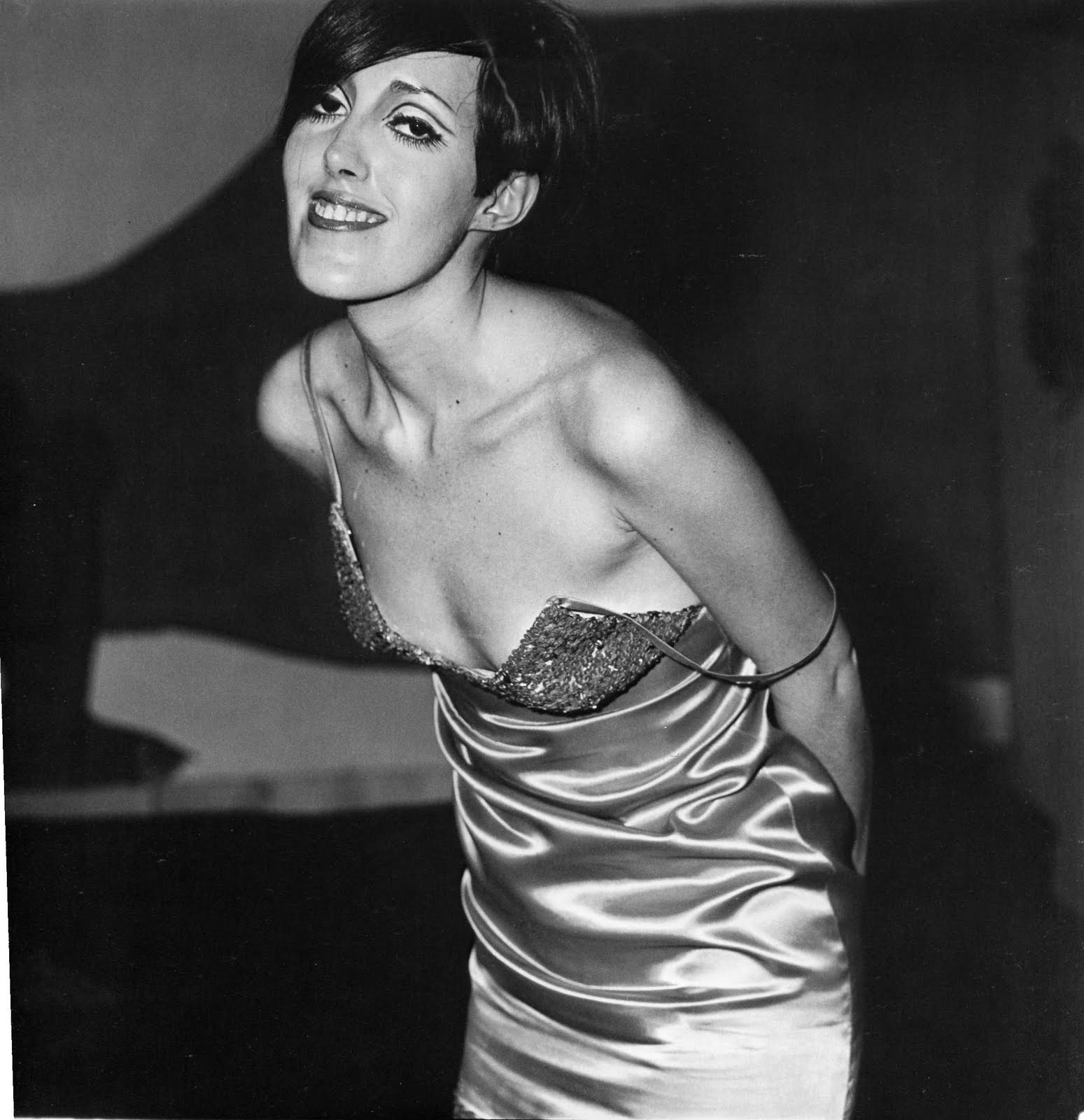
Diane Arbus, "Girl in a Shiny Dress" 
1967, Gelatin Silver Print


Diane Arbus, born on March 14th, 1923, was an American photographer whose work mainly focused on the bizarre and complexities of the human form; having subjects ranging from Hollywood starlets, drag queens, circus performers, nudists, and transgender people. She photographed the imperfect and created a conversation through her subjects. Out of all of Arbus' photographs, Girl in a Shiny Dress was the one that intrigued me the most. From the off-the-shoulder sequined dress to the dramatic maquillage, the anonymous subject captured the spirit of the Swinging Sixties and is the epitome of opulence and glamour juxtaposed with the notable eclecticism of the 1960's.

Friday, May 16, 2014

Aaron Maynard

Aaron Maynard
John Divola, "Zuma"
1977

John Divola, born in 1949, is a contemporary photographer who was born, raised, and still resides in Los Angeles. Receiving a Bachelor of Arts at our very own Cal State Northridge in 1971, he advanced to receive a Master of Fine Arts at U.C. Riverside in 1974, where he has been a professor since 1988. His, arguably, most famous work entitled "Zuma" was where he photographed abandoned houses on Zuma beach, and often times tagging the walls himself. For this series he thought about the issues of natural and artificial, and to demonstrate this he used the graffiti to make juxtaposition between the cracked, vandalized, houses and the natural, romantic sunsets. He believes his art, not only this series, was a part of his evolution as a character, rather than separate from it.